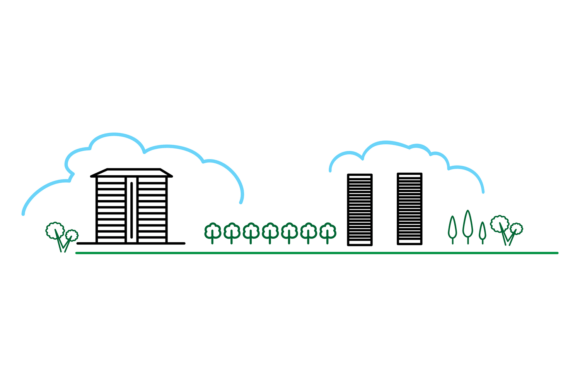
Downtown Green Street. Modern City Infog
Imagine a clean, scalable visual that captures urban sustainability—not as abstract data, but as a living street scene: bike lanes, solar lampposts, rain gardens, EV charging stations, and pedestrians moving freely beneath green canopies. That’s what Downtown Green Street. Modern City Infog delivers—a ready-to-use infographic element designed for clarity, versatility, and modern design sensibility.
It’s not just an illustration. It’s a modular, production-ready asset available in EPS, JPG, SVG, and transparent PNG formats—each optimized for different workflows. Whether you’re dropping it into a slide deck, embedding it in a blog post, printing it on a community placard, or animating it for a city planning video, the file adapts without pixelation or layout disruption.
Why This Matters—Depending on Who You Are
Your relationship to Downtown Green Street. Modern City Infog shifts based on your role, tools, and goals—not because the graphic changes, but because how you use it does.
For Educators & Students
A high school civics teacher might project the SVG version during a unit on sustainable infrastructure—zooming in on labeled elements like bioswales or shared mobility hubs to spark discussion. A university urban studies student could layer it into a GIS presentation, using the transparent PNG to overlay real-time traffic or air quality data. Here, value lies in clarity and teaching utility: clear iconography, intuitive spatial logic, and format flexibility that supports annotation and integration.
For Marketers & Content Creators
A sustainability blogger comparing green transit models might drop the JPG into a comparison carousel—paired with short captions about walkability metrics. A social media manager at a municipal agency could animate the SVG version frame-by-frame to highlight pedestrian-first redesigns in a 30-second Instagram Reel. For them, speed of implementation, visual consistency, and brand alignment matter most. The white background and transparent option mean no time spent erasing backgrounds or adjusting contrast.
For Small Business Owners & Planners
A café owner applying for a streetscape grant might include the EPS version in their proposal—not as decoration, but as a visual anchor showing how their storefront fits into a broader green corridor vision. A downtown development coordinator could import the SVG into Figma or Adobe XD and recolor bike lane stripes to match local branding guidelines before sharing with stakeholders. Their priority? Professional credibility, customizability, and reusability across internal and external documents.
For Freelancers & Designers
A UI/UX designer building a climate action dashboard might extract individual icons—like the EV charger or tree canopy—from the layered SVG and repurpose them as interactive state indicators. A print designer preparing a neighborhood revitalization report could scale the EPS to full-page size without worrying about raster artifacts. They need technical precision: vector fidelity, clean paths, and logical layer naming (where applicable)—not just “pretty visuals.”
What to Look For—Beyond the Preview Thumbnail
Not all infographics wear their usefulness on the surface. When evaluating whether Downtown Green Street. Modern City Infog fits your needs, consider these practical checkpoints:
- Format coverage: Do you need transparency for web overlays? Vector scalability for large-format signage? High-res JPG for quick client previews? This set covers all four major use cases—not just one.
- Design intention: Elements aren’t randomly placed. Bike lanes flow logically beside sidewalks; green infrastructure integrates with built form—not floating above it. That reflects real-world planning principles, making it more credible for professional or educational use.
- Adaptability: Can you easily recolor a bus stop icon to match your brand palette? Does the SVG retain editable groups? Is the JPG resolution sufficient for retina displays and printed reports? These details determine how long the asset stays useful—not just for today’s project, but next month’s pivot.
- Contextual neutrality: It avoids overly specific cultural cues (e.g., no localized signage fonts or vehicle models), so it works globally—whether you’re illustrating a concept for Toronto, Bogotá, or Seoul.
Real Projects, Real Decisions
Here’s how it shows up in practice—no hypotheticals:
- A nonprofit launching a “Green Corridors” campaign used the transparent PNG to composite the street scene over drone footage of their actual downtown—then added animated data callouts in After Effects. The vector base kept everything sharp at 4K.
- An architecture firm included the EPS version in a zoning variance submission. The planning board responded positively to its clarity—calling it “immediately legible” compared to dense technical drawings alone.
- A freelance illustrator bought the set not to use it as-is, but to study its icon hierarchy and spatial rhythm—then applied those lessons to their own custom cityscape commission.
Does It Fit Your Next Step?
If you’re weighing whether Downtown Green Street. Modern City Infog belongs in your toolkit, ask yourself:
- Do I need a trustworthy, production-ready visual—not a sketch or placeholder—that communicates urban sustainability without oversimplifying it?
- Will I use it across multiple formats (web, print, presentation, animation)?
- Do I value clean structure over decorative flair—so I can edit, scale, or integrate it without friction?
- Is accuracy important—not just aesthetically, but conceptually? (e.g., showing permeable pavement next to trees, not asphalt beside shrubs)
If yes to two or more, it’s likely a fit—even if you’re just starting out. Beginners benefit from its intuitive layout and format options; experienced users appreciate its technical reliability. It doesn’t replace deep research or original design—but it removes friction where clarity and consistency matter most.
And because it’s isolated on white with transparent alternatives, it doesn’t compete with your message. It supports it—quietly, professionally, and repeatedly.