Creative Calendar 2026 PowerPoint: A Strategic Tool for Intentional Planning in a Fragmented World
In an era defined by rapid context-switching, overlapping deadlines, and the constant pull of digital distraction, intentional planning has evolved from a nice-to-have habit into a core professional competency. The Creative Calendar 2026 PowerPoint is not just another calendar template—it’s a thoughtfully structured visual framework designed to align time, intention, and creativity across personal, entrepreneurial, and organizational workflows. Built for clarity without sacrificing vibrancy, this colorful planner presentation template meets a growing demand for tools that support both strategic foresight and human-centered execution.
More Than a Calendar: A Visual Operating System for Creative Work
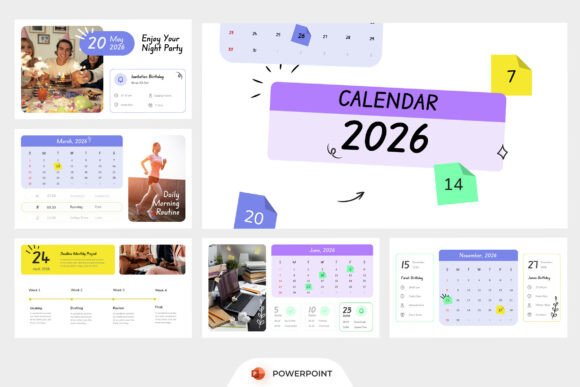
The Creative Calendar 2026 PowerPoint transcends traditional scheduling by integrating multiple planning dimensions into one cohesive, editable environment. Its monthly calendar layouts don’t merely display dates—they serve as anchors for layered decision-making. Paired with dedicated agenda sections, event reminder pages, timeline schedules, and personal planner elements, the template functions as a unified visual operating system. Unlike static PDF planners or generic slide decks, it’s built on a 16:9 widescreen ratio, optimized for modern displays, collaborative screen sharing, and dynamic presentations—whether pitching a content roadmap to stakeholders or guiding a team through a quarterly creative sprint.
This design philosophy reflects a broader shift in how professionals approach time management: away from rigid task lists and toward context-rich planning. Consider a freelance marketer mapping Q1 campaigns. With the Creative Calendar 2026 PowerPoint, they can overlay client deadlines, content production milestones, social media launch windows, and even personal recharge days—all within a single, color-coded visual narrative. That level of contextual integration supports cognitive fluency: users see not just *what* needs doing, but *why it matters*, *how it connects*, and *when it fits* within larger rhythms.
Aligning With Evolving Workflows and Expectations
Today’s professionals operate across hybrid environments—juggling asynchronous collaboration, real-time feedback loops, and evolving project scopes. Tools that require extensive setup, external plugins, or platform lock-in are increasingly sidelined in favor of lightweight, universally accessible solutions. The Creative Calendar 2026 PowerPoint answers this need directly: it’s delivered as native PowerPoint files, fully editable without subscription, and includes a Help Guide to accelerate onboarding. No cloud dependency. No learning curve steep enough to delay implementation. Just open, customize, present—or print.
This accessibility is especially valuable for teams navigating tool fatigue. According to recent workplace studies, knowledge workers now toggle between an average of 11 different apps daily. Each new interface fragments attention and increases cognitive load. By consolidating planning, tracking, and presentation into a single, familiar format—PowerPoint—the Creative Calendar 2026 PowerPoint reduces friction without compromising depth. A small business owner preparing for holiday season launches can use the same file to draft internal timelines, brief external designers, and present inventory forecasts to investors—all while preserving consistent branding, tone, and visual logic.
Design as Strategy: Why Color, Playfulness, and Clarity Matter
The template’s “playful infographic compositions” are not decorative flourishes—they’re functional design choices rooted in cognitive science. Research shows that strategically applied color improves information retention by up to 80%, while well-structured visual hierarchies reduce decision latency. The Creative Calendar 2026 PowerPoint leverages this insight: distinct hues differentiate categories (e.g., blue for client work, green for learning goals, coral for wellness), while clean typography and balanced whitespace prevent visual overwhelm. It’s a rare example of a productivity tool that feels energizing rather than exhausting—a subtle but meaningful factor in sustaining long-term engagement.
This emphasis on human-centered design resonates with broader cultural shifts. Consumers and creators alike are rejecting austerity-driven minimalism in favor of warmth, personality, and authenticity. From brand guidelines to personal dashboards, there’s a quiet but powerful movement toward tools that reflect individuality—not just efficiency. The Creative Calendar 2026 PowerPoint honors that preference: its editable nature means users aren’t forced into someone else’s structure. They adapt colors, reorder sections, insert custom icons, or swap out headers—all while retaining professional polish and structural integrity.
Bridging Personal Discipline and Professional Impact
One of the most compelling aspects of the Creative Calendar 2026 PowerPoint is its dual-purpose architecture. It serves equally well for personal organizers managing life transitions—like launching a side project or preparing for certification—and for business schedulers coordinating cross-functional product rollouts. This versatility speaks to a deeper truth: the boundaries between personal and professional productivity have blurred. Entrepreneurs wear multiple hats. Educators design curriculum while managing family logistics. Marketers craft brand narratives while nurturing their own creative practice.
Take content planning, for instance—a domain where consistency and creativity must coexist. Using the Creative Calendar 2026 PowerPoint, a creator can block out writing time, schedule batch recording sessions, allocate space for audience research, and visually map seasonal themes—all in one view. The timeline schedule slides allow them to zoom out and assess pacing across months, while the event reminder pages ensure no newsletter send or live session slips through the cracks. It’s not about adding more tasks; it’s about making existing commitments visible, manageable, and meaningfully connected.
Technology Trends Supporting the Shift Toward Integrated Planning
The rise of templates like the Creative Calendar 2026 PowerPoint parallels several converging technology trends. First, the resurgence of offline-first, file-based workflows—especially among creatives who value control over data and simplicity over feature bloat. Second, the growing preference for “low-code” tools that empower customization without technical expertise. Third, the increasing expectation that productivity software should support storytelling—not just data entry. When presenting a 2026 content strategy to leadership, for example, being able to show a vibrant, annotated calendar layout conveys vision and feasibility far more effectively than a spreadsheet ever could.
Additionally, AI-assisted tools are raising expectations for human input—not replacing it. As generative features automate drafting and formatting, professionals are placing higher value on tools that amplify their strategic judgment and aesthetic sensibility. The Creative Calendar 2026 PowerPoint fits seamlessly into this ecosystem: it doesn’t generate plans for you, but it gives you the canvas, palette, and structure to build them with intention and impact.
Practical Adoption: Who Benefits—and How
The Creative Calendar 2026 PowerPoint delivers tangible value across diverse user groups:
- Freelancers and solopreneurs gain a portable, presentation-ready system to manage clients, projects, and self-development—without juggling five different apps.
- Marketing and communications teams use it to align campaign calendars with editorial calendars, sales cycles, and industry events—ensuring messaging consistency and timing precision.
- Educators and workshop facilitators adapt the agenda and timeline slides to design immersive learning journeys, embedding reflection points, resource links, and milestone checks.
- Event planners and community organizers leverage the event reminder and monthly layout pages to coordinate vendor timelines, volunteer shifts, and promotional cadences—all in a shareable, branded format.
- Students and lifelong learners repurpose the personal planner elements to track coursework, skill-building goals, reading lists, and mentorship check-ins.
Crucially, adoption requires no behavioral overhaul. Users start where they are—importing existing to-do lists, pasting in Google Calendar exports, or sketching rough ideas—and gradually layer in the template’s richer capabilities. Its easy-to-use, full-editable nature lowers the barrier to entry while supporting growth in sophistication over time.
Looking Ahead: Planning as a Practice, Not a Product
As we move further into 2026 and beyond, the most resilient professionals won’t be those with the most sophisticated tools—but those with the clearest frameworks for aligning action with purpose. The Creative Calendar 2026 PowerPoint succeeds because it treats planning not as a transactional chore, but as a reflective, iterative, and deeply human practice. It invites users to ask better questions: What energy do I want to bring to this quarter? Which commitments truly serve my goals—and which are legacy obligations? How can I make my schedule not just functional, but inspiring?
In a world saturated with notifications and noise, choosing a tool like the Creative Calendar 2026 PowerPoint is itself an act of intention. It signals a commitment to clarity, creativity, and continuity—across projects, roles, and seasons of life. And because it arrives as editable PowerPoint files—with free fonts included and zero licensing complexity—it empowers that commitment without compromise.
Ultimately, the future of planning isn’t about automation alone. It’s about augmentation: equipping people with structures that honor complexity while inviting simplicity, that support discipline without stifling joy, and that turn the abstract idea of “time management” into something vivid, actionable, and unmistakably human.